NORTHERN NEVADA’S
PREMIER EYE DOCTORS
Leaders in experienced, state-of-the-art medical and surgical care for the eyes.
CONDITIONS TREATED
What are Cataracts?
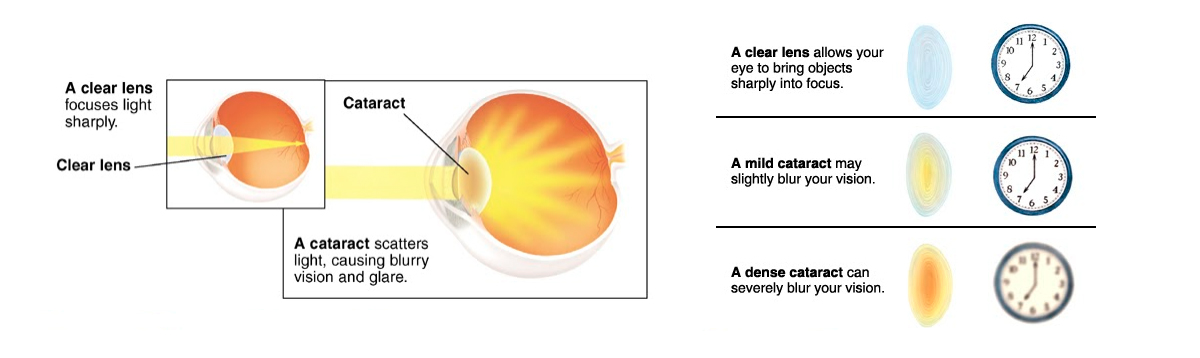
 A clear lens in the eye focuses light. This lets the eye see images sharply. With age, the lens slowly becomes cloudy. The cloudy lens is a cataract. A cataract scatters light and makes it hard for the eye to focus. Cataracts often form in both eyes. But one lens may cloud faster than the other.
The Aging of Your Lens
Your lens may cloud so slowly that you don’t notice any vision changes at first. But as the cataract worsens, the eye has difficulty focusing. In early stages, glasses may help you see better. As the lens gets cloudier, your doctor may recommend surgery to restore your vision.
How to Know if You Have Cataracts
An evaluation will help your eye doctor learn more about vision problems you’re having and whether cataracts are the cause. This evaluation includes a medical history, vision tests, and an eye exam. What the doctor learns will help him or her determine the best treatment options for you.
Medical History
You will be asked questions about your vision and any other eye problems you may have. Your eye doctor will also ask about health problems, such as diabetes. Be sure to mention if you are taking any medications, supplements, or herbal remedies.
Vision Tests
Your eye doctor will perform several tests to check your vision. This includes using an eye chart, and testing your vision under different lighting. If you wear eyeglasses or contact lenses, bring them to the exam. This lets your eye doctor check the prescription.
An Eye Exam
During an eye exam, the doctor uses a slit lamp and an ophthalmoscope to look inside your eye. In most cases, eyedrops are used to dilate (widen) your pupils before the exam.
Discussing Treatment Options
After an eye exam, you and your eye doctor will discuss treatment options. A new eyeglass or contact lens prescription may improve your vision for a while. But surgery is the only way to remove a cataract and replace your cloudy lens. If your cataract isn’t keeping you from daily activities, you may wait to have it removed. Together you and your eye doctor will decide what’s best for you.
Advanced Laser Cataract Surgery
Traditional cataract surgery has been a reliable method for decades, but laser cataract surgery offers enhanced precision and outcomes. This advanced procedure uses laser technology to:
- Create precise incisions
- Break up the cloudy lens for easier removal
- Minimize the risk of complications
- Allow for a quicker recovery time
Our Reno clinic specializes in laser cataract surgery, offering patients the benefits of improved accuracy and a more comfortable experience.
Cataracts FAQs
What are cataracts?
A cataract occurs when the eye’s natural, clear lens becomes cloudy or opaque, much like a fogged-up window. This cloudiness prevents light from passing through clearly to the retina, which results in blurry, dim, or distorted vision.
What causes cataracts?
While aging is the most common cause, cataracts can also be influenced by health factors like diabetes or long-term use of certain medications like steroids. Environmental factors, including smoking, eye injuries, and prolonged exposure to UV rays without protection, can also accelerate their development.
What are the symptoms of cataracts?
Common symptoms include cloudy or "muddy" vision, increased sensitivity to glare, and seeing halos around lights, especially while driving at night. You may also notice that colors seem faded or yellowed, or find yourself needing more frequent changes to your eyeglass prescription.
At what age do cataracts usually develop?
Most cataracts develop slowly after the age of 60 as part of the natural aging process. However, lifestyle factors or underlying medical conditions can sometimes cause them to appear much earlier, making regular check-ups important at any age.
Can cataracts be treated without surgery?
In the early stages, symptoms may be temporarily managed with stronger lighting or an updated prescription for glasses or contacts. However, because a cataract is a physical change in the lens of the eye, surgery is currently the only effective way to remove it and restore clear vision.
When is cataract surgery necessary?
Surgery is usually recommended once cataracts begin to interfere with your quality of life or daily safety. If you find it difficult to read, work, or drive comfortably, especially at night, it may be time to discuss surgical options with your doctor.
Is cataract surgery safe?
Cataract surgery is widely recognized as one of the most common, successful, and safest medical procedures performed today. Modern advancements allow for high precision and excellent patient outcomes, helping millions of people regain their visual independence every year.
How long does cataract surgery take?
The procedure itself is quite fast, typically taking only 15 to 30 minutes to complete. It is performed as an outpatient procedure, meaning you will be able to go home the same day to begin your recovery in comfort.
How can I know if I have cataracts?
The only way to definitively diagnose a cataract is through a comprehensive eye exam with a qualified professional. At Reno Eye Care Professionals, our doctors use specialized diagnostic tools to assess the health of your lens and determine the best course of action for your vision.